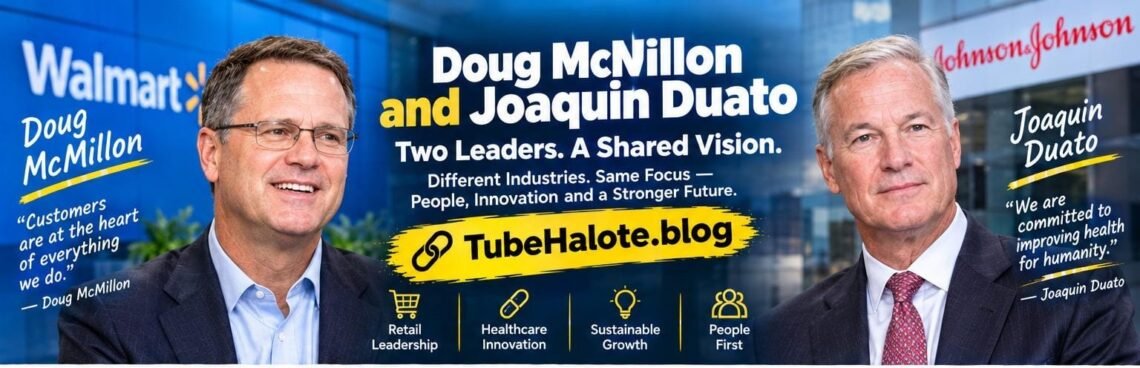
Doug McMillon and Joaquin Duato are prominent business leaders known for guiding large international companies through changing markets, technological developments, and evolving customer expectations. McMillon spent more than a decade as the chief executive officer of Walmart, while Duato leads Johnson & Johnson, a global healthcare company. Their careers offer an interesting comparison of leadership in retail and healthcare.
People searching for Doug McMillon and Joaquin Duato may want to understand who these executives are, how their professional journeys differ, what they accomplished, and whether they have a direct business connection. Although both have extensive experience leading global organizations, they built their careers in different industries and faced different strategic challenges.
This article explores their biographies, education, leadership approaches, professional achievements, and current roles. It also explains the key similarities and differences between the two executives, providing a clear overview for readers interested in corporate leadership and business strategy.
Who Are Doug McMillon and Joaquin Duato?
Doug McMillon and Joaquin Duato are experienced executives who have held top leadership positions at major multinational companies. Their careers illustrate two different paths to executive leadership: one built around retail operations and customer value, and the other centered on healthcare innovation, pharmaceutical development, and medical technology.
Who Is Doug McMillon?
Doug McMillon is an American business executive best known for his leadership of Walmart, one of the world’s largest retailers. He became Walmart’s president and CEO in February 2014 and served in that position until January 31, 2026. His career at the company began in 1984 as an hourly associate, giving him experience with Walmart’s operations long before he reached its highest executive position.
During his tenure as CEO, McMillon helped expand Walmart’s digital capabilities, strengthen its e-commerce operations, and integrate online shopping with its physical stores. He also emphasized competitive pricing, investments in employees, and improvements to customer experiences.
McMillon’s career demonstrates how experience across different levels of an organization can help a leader understand its operations and develop a long-term business strategy.
Who Is Joaquin Duato?
Joaquin Duato is a business executive who serves as chairman and CEO of Johnson & Johnson. He became CEO in January 2022 and chairman in January 2023. His professional experience spans pharmaceuticals, consumer health, global operations, technology, and supply chain management.
Duato joined Johnson & Johnson in 1989 and spent decades working across different business functions and geographic markets. Before becoming CEO, he held senior leadership positions, including vice chairman of the company’s executive committee and worldwide chairman of pharmaceuticals.
Under his leadership, Johnson & Johnson has focused on innovative medicines and medical technology, with an emphasis on addressing significant unmet medical needs. His responsibilities involve balancing scientific innovation, patient needs, regulatory requirements, and long-term business performance.
Duato’s career illustrates the importance of industry expertise, organizational experience, and strategic decision-making in the global healthcare sector.
Readers can learn more through Johnson & Johnson’s official Joaquin Duato biography.
Doug McMillon and Joaquin Duato: Key Facts Compared
Although McMillon and Duato share experience leading multinational organizations, their professional backgrounds and responsibilities differ considerably.
| Category | Doug McMillon | Joaquin Duato |
|---|---|---|
| Main company | Walmart | Johnson & Johnson |
| Industry | Retail and e-commerce | Healthcare, pharmaceuticals, and medical technology |
| CEO tenure began | February 2014 | January 2022 |
| Current status as of October 2026 | Former Walmart CEO; retired from the role in January 2026 | Chairman and CEO of Johnson & Johnson |
| Career background | Began as a Walmart hourly associate | Joined Johnson & Johnson in 1989 |
| Education | Bachelor’s degree in accounting; MBA | MBA and master’s degree in international management |
| Major strategic focus | Pricing, retail operations, digital commerce, and customer experience | Innovative medicines, medical technology, and healthcare development |
| Leadership experience | More than a decade as Walmart CEO | Decades of experience at Johnson & Johnson |
The comparison shows that both executives developed extensive organizational knowledge, but their business priorities reflect the industries they serve. Retail leadership requires attention to consumer demand, pricing, inventory, and distribution. Healthcare leadership places additional emphasis on research, patient outcomes, clinical development, and regulatory responsibilities.
Educational Background and Professional Development
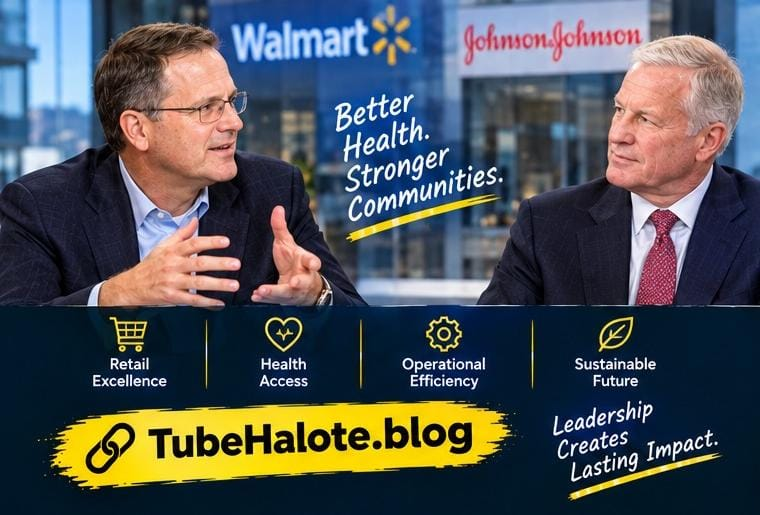
Education can provide the foundation for a business career, but executive leadership also depends on practical experience, industry knowledge, and the ability to make decisions under pressure.
Doug McMillon’s Education
McMillon earned a bachelor’s degree in accounting from the University of Arkansas and an MBA from the University of Tulsa. His educational background provided business and financial knowledge that could be applied to retail management, organizational planning, and corporate strategy.
His professional development also came from working across Walmart’s business. Starting in an hourly role allowed him to gain direct exposure to the company’s operational environment before advancing into management and executive positions.
This combination of formal education and practical experience is relevant for people interested in careers in retail management, operations, finance, or general business leadership.
Joaquin Duato’s Education
Duato earned an MBA from ESADE Business School in Barcelona, Spain, and a Master of International Management from the Thunderbird School of Global Management in Arizona.
His education complements a career that involved international responsibilities and leadership across multiple business functions. Managing a global healthcare organization requires an understanding of markets, organizational strategy, scientific investment, and the different requirements affecting healthcare businesses around the world.
Duato’s professional journey also demonstrates the value of developing expertise within one organization. His advancement through Johnson & Johnson gave him exposure to different business segments before he became CEO.
How Did Doug McMillon Build His Career at Walmart?
McMillon’s career is an example of long-term advancement within a single organization. Rather than entering Walmart directly at an executive level, he progressed through positions that exposed him to retail operations, merchandising, and international business.
His career can be understood through several important stages.
- Starting in store operations: McMillon began working at Walmart in 1984 as an hourly associate. This early experience gave him firsthand exposure to the retail environment.
- Developing business expertise: He progressed into management and merchandising responsibilities, building an understanding of products, customers, and operational decisions.
- Leading Sam’s Club: Before becoming Walmart CEO, he served as president and CEO of Sam’s Club, Walmart’s membership-based retail business.
- Taking responsibility for international operations: He later led Walmart International, gaining experience managing businesses across different markets.
- Becoming Walmart CEO: In February 2014, McMillon became president and CEO, overseeing the company’s broader strategy and performance.
- Leading a digital transformation: During his tenure, Walmart expanded e-commerce and invested in technology to connect its stores, online platforms, and fulfillment operations.
- Transitioning from the CEO role: McMillon retired from the position on January 31, 2026. Walmart named John Furner as his successor, effective February 1, 2026.
His career offers an important lesson: operational knowledge can be a valuable foundation for executive decision-making, especially in businesses where customer experience and efficiency directly affect performance.
How Did Joaquin Duato Become CEO of Johnson & Johnson?
Duato’s career developed through a different route, with decades of experience in healthcare and pharmaceutical management.
He joined Johnson & Johnson in 1989 and worked across geographic regions, business functions, and different segments of the organization. This experience gave him an understanding of how a multinational healthcare company operates and how decisions in one area can affect the wider business.
Several milestones help explain his rise to the company’s top position.
- 1989 — Joined Johnson & Johnson: Duato began a career that would span multiple decades at the company.
- 2011 — Became worldwide chairman of pharmaceuticals: This position placed him in a senior leadership role overseeing an important business segment.
- 2018 — Became vice chairman of the executive committee: He took on broader responsibilities within the company’s leadership structure.
- 2022 — Became CEO: Duato assumed responsibility for the company’s overall strategy and business performance in January.
- 2023 — Became chairman: He added the chairmanship of the board to his responsibilities.
- 2026 — Continued leading Johnson & Johnson: As of October 2026, he remains chairman and CEO and has also been elected to join PepsiCo’s board of directors, effective December 1, 2026.
Duato’s progression highlights the importance of specialized industry knowledge, international experience, and leadership across multiple business areas. In healthcare, executives must also consider scientific development timelines, patient needs, product safety, and regulatory requirements.
Comparing Their Leadership Styles
Leadership styles are not always easy to measure objectively. However, the industries each executive leads, their career experiences, and their companies’ strategic priorities offer useful ways to understand their approaches.
Doug McMillon: Customer Value and Operational Execution
McMillon’s leadership at Walmart emphasized affordability, operational efficiency, and adapting a traditional retailer to changing shopping habits.
Retail companies operate in competitive markets where customers can compare prices and switch providers quickly. As a result, leaders must coordinate pricing, inventory, supply chains, staffing, store operations, and digital shopping experiences.
McMillon’s strategy included strengthening Walmart’s online business while continuing to use its extensive store network. Physical locations could support customer pickup, local fulfillment, and other services that connect online shopping with in-person operations.
His career also reflects the importance of understanding employees and frontline operations. Leaders who understand how everyday business processes work may be better positioned to identify inefficiencies and implement practical changes.
Joaquin Duato: Healthcare Innovation and Long-Term Strategy
Duato’s leadership operates in an environment where business decisions can influence the availability of medicines and medical technologies. Healthcare companies must consider commercial performance alongside scientific evidence, product safety, regulatory approval, and patient needs.
Johnson & Johnson’s focus under Duato includes innovative medicines and medical technology, with strategic priorities covering areas such as oncology, immunology, neuroscience, cardiovascular disease, surgery, and vision.
Healthcare innovation often requires sustained investment before a product can reach the market. Executives must therefore evaluate research opportunities, allocate resources carefully, and manage risks that may not become clear for several years.
Duato’s background across pharmaceuticals, technology, and supply chain operations is particularly relevant to these responsibilities.
What Can We Learn From Their Different Approaches?
The comparison suggests that effective leadership depends partly on understanding the environment in which a company operates.
McMillon’s retail experience illustrates the importance of customer value, execution, and operational efficiency. Duato’s healthcare experience highlights the role of innovation, specialized expertise, and long-term investment.
Neither approach is universally better. A successful strategy must fit the company’s goals, industry conditions, and responsibilities.
Major Achievements and Business Impact
The accomplishments associated with McMillon and Duato should be understood in the context of their respective organizations rather than treated as identical measures of success.
Doug McMillon’s Achievements at Walmart
McMillon’s tenure coincided with major changes in how consumers shop and how retailers compete.
Key areas of his leadership included:
- Expanding e-commerce: Walmart invested in online shopping capabilities and improved connections between digital platforms and physical stores.
- Strengthening omnichannel retail: The company developed ways for customers to combine online ordering with store-based services.
- Maintaining a focus on affordability: Competitive pricing remained central to Walmart’s customer proposition.
- Investing in employees: Walmart expanded certain benefits and education opportunities during his tenure.
- Using technology in retail operations: Digital tools and automation became increasingly important to fulfillment, inventory management, and customer service.
These developments occurred alongside broader changes in retail, including the growth of online shopping and evolving consumer expectations. It would be inaccurate to attribute every company outcome to one executive, but McMillon’s leadership was an important part of Walmart’s strategic direction during this period.
Joaquin Duato’s Achievements at Johnson & Johnson
Duato’s leadership has centered on the company’s healthcare businesses and its efforts to develop treatments and medical technologies.
Important areas of focus include:
- Innovative medicines: Supporting research and development in areas of significant medical need.
- Medical technology: Advancing technologies used in surgery, vision care, and other medical settings.
- Portfolio strategy: Prioritizing business areas that align with the company’s healthcare objectives.
- Global operations: Managing a complex organization that operates across different markets and regulatory environments.
- Technology and data: Encouraging the use of technology to support research, operational performance, and healthcare innovation.
The impact of pharmaceutical and medical technology investments often takes years to assess fully. Research outcomes, regulatory decisions, patient access, and commercial results all influence whether a strategic initiative ultimately succeeds.
Are Doug McMillon and Joaquin Duato Connected Professionally?
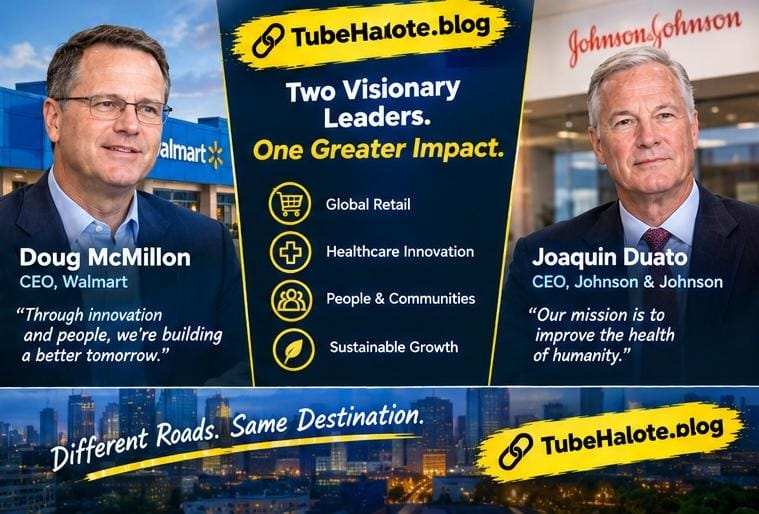
There is an important distinction between comparing two executives and establishing that they have a direct professional relationship.
McMillon led Walmart until January 2026, while Duato leads Johnson & Johnson. Their positions place them within the wider international business community, where executives may participate in corporate governance, industry organizations, and business discussions.
However, the official biographies and company announcements referenced in this article do not establish a specific partnership, shared business venture, or direct working relationship between McMillon and Duato.
A connection should not be assumed simply because both executives lead or have led major corporations. To confirm a direct relationship, readers would need reliable evidence, such as a joint company announcement, a documented board appointment, a shared project, or a credible report describing their collaboration.
For readers researching this keyword, the most useful established connection is the comparison of their leadership careers and their influence on two major global businesses.
What Business Leaders Can Learn From McMillon and Duato
Although their careers developed in different industries, their experiences provide several useful lessons for managers, entrepreneurs, and aspiring executives.
1. Learn the Business From the Inside
McMillon’s advancement from an hourly position to CEO illustrates the value of understanding everyday operations. Employees who understand customer needs and operational challenges can bring practical insight to management decisions.
For example, a retail manager who has worked directly with inventory and customers may recognize recurring problems that are less visible in a financial report.
2. Develop Expertise Before Taking on Greater Responsibility
Duato’s decades at Johnson & Johnson gave him experience across several business functions and markets. His career demonstrates the value of developing a broad understanding of an industry before leading an entire organization.
A manager in healthcare, for instance, benefits from understanding not only sales but also product development, compliance, supply chains, and patient needs.
3. Adapt to Technological Change
Both retail and healthcare are affected by technological developments. Digital commerce changes how customers shop, while advances in data science and medical technology can influence how healthcare organizations conduct research and deliver services.
Business leaders should evaluate new technologies based on their practical value, risks, costs, and relevance to the organization’s objectives.
4. Make Strategy Fit the Industry
A retail strategy focused on inventory turnover and pricing cannot simply be transferred to pharmaceutical research. Different industries operate under different economic, technical, and regulatory conditions.
Successful leaders understand these differences and build strategies that address the specific challenges their organizations face.
5. Prepare for Leadership Transitions
McMillon’s departure and Walmart’s appointment of John Furner demonstrate the importance of succession planning. Leadership transitions can affect company culture, strategic priorities, and investor expectations.
Organizations benefit from identifying capable future leaders, communicating transitions clearly, and maintaining operational continuity.
6. Measure Long-Term Results, Not Just Announcements
A new technology, product, or strategic plan does not automatically guarantee success. Leaders should evaluate measurable outcomes, such as customer satisfaction, operational performance, research progress, financial results, and long-term business resilience.
This principle is particularly important when comparing companies in industries with very different timelines and performance measures.
Frequently Asked Questions
1. Who are Doug McMillon and Joaquin Duato?
Doug McMillon is the former president and CEO of Walmart, a position he held from February 2014 through January 2026. Joaquin Duato is the chairman and CEO of Johnson & Johnson, having become CEO in January 2022 and chairman in January 2023.
2. Do Doug McMillon and Joaquin Duato work for the same company?
No. McMillon led Walmart until his retirement from the CEO role in January 2026. Duato continues to lead Johnson & Johnson. They are associated with different companies and industries.
3. Are Doug McMillon and Joaquin Duato business partners?
No specific business partnership between them is established by the official sources discussed here. Although both have held senior positions in the international business community, a direct partnership should not be claimed without supporting evidence.
4. What is the main difference between Doug McMillon and Joaquin Duato?
Their primary difference is their industry experience. McMillon’s career centers on retail, merchandising, e-commerce, and operational efficiency. Duato’s career focuses on healthcare, pharmaceuticals, medical technology, and international healthcare management.
5. When did Doug McMillon leave Walmart as CEO?
McMillon retired as Walmart’s president and CEO on January 31, 2026. John Furner succeeded him, effective February 1, 2026.
6. Is Joaquin Duato still the CEO of Johnson & Johnson?
Yes. As of October 2026, Duato remains chairman and CEO of Johnson & Johnson. He became CEO in January 2022 and chairman in January 2023.
7. What are the educational qualifications of Doug McMillon and Joaquin Duato?
McMillon holds a bachelor’s degree in accounting from the University of Arkansas and an MBA from the University of Tulsa. Duato holds an MBA from ESADE Business School and a Master of International Management from the Thunderbird School of Global Management.
8. What leadership lessons can be learned from their careers?
Their careers highlight the importance of understanding business operations, developing industry expertise, adapting to technological change, planning for succession, and aligning strategy with organizational goals. Their different professional backgrounds also demonstrate that there is no single career path to executive leadership.
Conclusion
Doug McMillon and Joaquin Duato represent two distinct approaches to leading large multinational organizations. McMillon’s career at Walmart demonstrates the value of operational experience, customer-focused retail strategy, and digital transformation. Duato’s career at Johnson & Johnson highlights the importance of healthcare expertise, scientific innovation, and long-term strategic planning.
Although their industries and responsibilities differ, both careers offer practical lessons about organizational leadership, technological adaptation, and business strategy. The available official information does not establish a direct partnership between the two executives, making a career and leadership comparison the most reliable way to understand the keyword.
For readers interested in business leadership, their experiences offer a useful reminder that effective executives combine industry knowledge with the ability to adapt, make informed decisions, and guide organizations through changing conditions.
For more: Visit: TubeHalote