Introduction
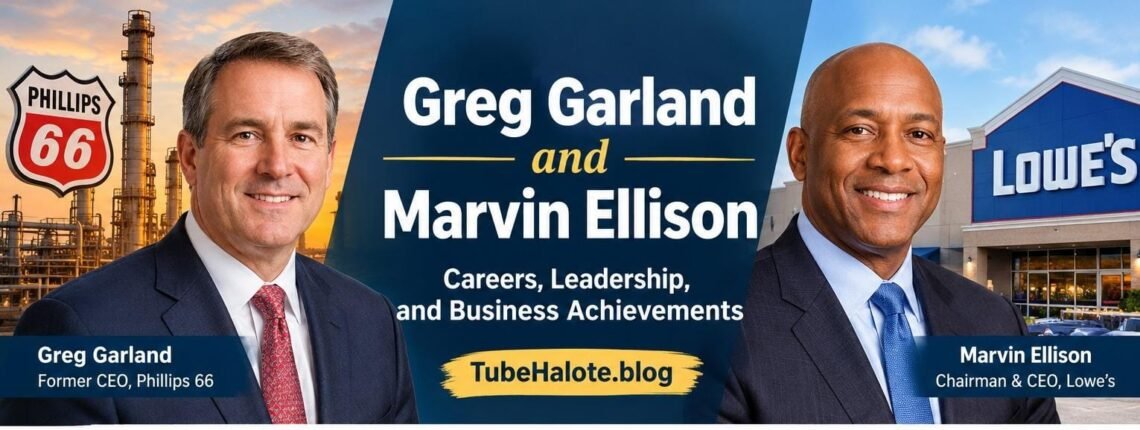
Greg Garland and Marvin Ellison are two well-known American business executives who have built their careers in different industries. Garland is recognized for his leadership in the energy sector, particularly through his work with Phillips 66. Ellison, meanwhile, is known for his extensive retail experience and leadership at Lowe’s Companies, one of the largest home improvement retailers in the United States.
Although their professional backgrounds differ, both executives offer useful examples of corporate leadership, operational management, and long-term business strategy. Understanding their careers helps explain how experienced leaders guide large organizations, manage complex operations, and respond to changing market conditions.
This article explores Greg Garland and Marvin Ellison, including their professional backgrounds, major career milestones, leadership approaches, and contributions to their respective industries. It also examines their similarities and differences while separating documented facts from assumptions about their professional relationship.
Who Are Greg Garland and Marvin Ellison?
Greg Garland is an American business executive with a long career in energy, chemicals, and industrial management. He served as chairman and chief executive officer of Phillips 66 from 2012 to 2022 before becoming executive chairman. He retired from that position in 2024.
Marvin Ellison is an American retail executive who became president and chief executive officer of Lowe’s in July 2018. He became chairman of the company’s board in 2021. His career includes senior leadership positions at Target, The Home Depot, and J.C. Penney.
Both executives have experience managing large organizations, but their responsibilities involve different products, customers, and business challenges.
| Category | Greg Garland | Marvin Ellison |
|---|---|---|
| Main industry | Energy and chemicals | Retail and home improvement |
| Best-known leadership role | Former chairman and CEO of Phillips 66 | Chairman, president, and CEO of Lowe’s |
| Major company experience | Phillips 66, ConocoPhillips, Chevron Phillips Chemical | Lowe’s, J.C. Penney, The Home Depot, Target |
| Professional background | Chemical engineering and energy management | Retail operations, logistics, and business management |
| Key leadership focus | Energy operations, business performance, and industrial strategy | Customer experience, store operations, and retail growth |
These differences provide a useful starting point for understanding why both executives are notable in American business.
Greg Garland: Career and Professional Background
Early Career and Education
Greg C. Garland studied chemical engineering at Texas A&M University, earning his bachelor’s degree in 1980. His technical education provided a foundation for a career in the energy and chemicals industries.
Garland began working for Phillips Petroleum Company in 1980 as a project engineer at its Plastics Technical Center. Over time, he moved through several positions involving engineering, sales, business development, and chemicals management.
This progression gave him experience in both technical operations and commercial decision-making. Such experience can be especially valuable in industries where companies must balance production efficiency, infrastructure investment, safety, and changing market conditions.
Leadership at Phillips 66
Garland became chairman and chief executive officer of Phillips 66 in 2012, when the company began operating as an independent business following its separation from ConocoPhillips.
Phillips 66 operates across several parts of the energy value chain, including refining, midstream transportation, chemicals, and marketing. Managing such a company requires coordination among business units with different operational demands and financial priorities.
During his leadership, Garland focused on strengthening the company’s operations and financial position while overseeing its development as an independent energy business. His responsibilities included guiding investment decisions, managing business risks, and maintaining relationships with employees, customers, investors, and other stakeholders.
In 2022, Phillips 66 announced that Garland would step down as CEO and become executive chairman. Mark Lashier succeeded him as CEO on July 1, 2022. Garland remained executive chairman until his retirement in 2024.
Greg Garland’s Broader Professional Contributions
Garland’s experience extended beyond his executive responsibilities at Phillips 66. He also participated in corporate governance and community organizations, including work connected with the Barbara Bush Houston Literacy Foundation and other civic and industry groups.
His career illustrates how technical knowledge can support advancement into senior corporate leadership. It also demonstrates the importance of understanding financial performance, organizational structure, and long-term investment decisions.
Marvin Ellison: Career and Professional Background
Early Experience in Retail
Marvin Ellison developed his career through operational positions in the American retail industry. Before joining Lowe’s, he spent approximately 15 years at Target Corporation, beginning in 1987.
He later joined The Home Depot in 2002 and held several leadership roles. These positions included responsibilities involving logistics, loss prevention, regional operations, and U.S. store management.
His work at The Home Depot gave him extensive experience in the home improvement market. He helped oversee a large retail network, where customer service, inventory availability, employee performance, and supply chain efficiency were important operational priorities.
Ellison earned a bachelor’s degree in business administration from the University of Memphis and an MBA from Emory University.
Leadership at J.C. Penney
In 2014, Ellison joined J.C. Penney as president before becoming its chief executive officer in 2015. He later served as chairman of the board.
His time at J.C. Penney involved efforts to improve the company’s financial position and operating performance. Like many traditional department store businesses, J.C. Penney faced significant challenges as consumer shopping habits changed and online retail became increasingly important.
His experience at the company added another dimension to his leadership background: managing a business through a difficult period while balancing customer expectations, store operations, and financial priorities.
Becoming CEO of Lowe’s
Lowe’s announced Ellison’s appointment as president and CEO in May 2018, with the appointment taking effect on July 2, 2018. He became chairman of the board in May 2021.
At Lowe’s, Ellison has led a business serving homeowners, do-it-yourself customers, and professional contractors. The company’s operations involve thousands of products, a nationwide store network, distribution facilities, and digital shopping services.
His leadership responsibilities include several important areas:
- Customer experience: Making shopping easier for customers and improving service.
- Store operations: Supporting efficient processes and consistent performance across locations.
- Supply chain management: Helping ensure products are available when customers need them.
- Digital retail: Improving online shopping and the connection between digital and physical stores.
- Professional customers: Serving contractors and other customers who depend on reliable product availability.
Ellison’s career demonstrates how experience across different retail companies can help an executive understand customer behavior, operational efficiency, and the challenges of running a large consumer-facing business.
Greg Garland and Marvin Ellison: Comparing Their Leadership Styles
Greg Garland and Marvin Ellison have worked in different industries, but their careers share several themes. Both have held senior positions involving large workforces, complicated operating systems, and decisions that affect long-term company performance.
Their professional experience also shows why leadership strategies must reflect the nature of the business.
1. Operational Excellence
Garland’s background involved industrial operations, energy infrastructure, chemicals, and capital-intensive projects. In these environments, companies must manage reliability, safety, production costs, and long-term investment requirements.
Ellison’s experience centers on retail operations. His responsibilities involve store performance, inventory management, employee productivity, customer service, and distribution systems.
Although the details differ, both roles require leaders to identify inefficiencies and improve how an organization performs its daily work.
2. Strategic Decision-Making
Energy companies and retailers operate under different market conditions. Energy businesses must consider commodity prices, infrastructure requirements, regulations, and global supply patterns. Retailers must respond to consumer spending, competition, housing-related demand, and changing shopping habits.
Garland’s experience reflects the importance of long-term planning in a capital-intensive industry. Ellison’s career highlights the need to combine operational discipline with responsiveness to customers.
Neither approach is automatically better. Each must fit the organization’s goals and operating environment.
3. Managing Large Organizations
Senior executives cannot personally manage every operational decision. Instead, they establish priorities, develop leadership teams, allocate resources, and monitor results.
Both Garland and Ellison have experience working within organizations that require coordination across many functions. Their careers illustrate how leadership depends on setting direction while allowing experienced teams to manage specialized responsibilities.
Key Differences Between Greg Garland and Marvin Ellison
The most significant differences between the two executives involve their industries, professional training, and day-to-day business priorities.
| Comparison point | Greg Garland | Marvin Ellison |
|---|---|---|
| Technical foundation | Chemical engineering | Business administration and retail operations |
| Main business environment | Energy production, refining, and logistics | Stores, distribution, and consumer retail |
| Primary customers and stakeholders | Energy buyers, industrial partners, investors, and regulators | Homeowners, contractors, employees, and retail customers |
| Operational priorities | Industrial reliability, investment, and energy supply chains | Customer service, product availability, and store efficiency |
| Leadership transition | Retired from Phillips 66 in 2024 | Continues to lead Lowe’s, according to its published leadership information |
The comparison shows that executive leadership is not limited to one educational path or industry. Different types of experience can prepare people for senior roles, depending on the demands of their organizations.
Is There a Professional Relationship Between Greg Garland and Marvin Ellison?
People searching for Greg Garland and Marvin Ellison together may be looking for a shared business connection, a comparison of their careers, or information about their corporate positions.
However, their publicly documented career histories primarily concern separate companies and industries. Garland’s major executive role was at Phillips 66, while Ellison’s leadership career includes Target, The Home Depot, J.C. Penney, and Lowe’s.
The available biographical information does not, by itself, establish a direct partnership, family relationship, or shared business venture between them. Their careers can be compared meaningfully without assuming that they have worked together.
When researching a possible connection between two executives, it is useful to look for reliable evidence such as official board memberships, corporate announcements, joint projects, or verified public statements. Similar levels of professional success do not necessarily indicate a personal or business relationship.
What Business Lessons Can Be Learned From Their Careers?
The professional experiences of Greg Garland and Marvin Ellison offer several practical lessons for people interested in business, management, and leadership.
Build Expertise Before Seeking Senior Roles
Garland developed technical experience in engineering and chemicals before moving into executive management. Ellison built his career through operational positions across major retailers.
Both paths demonstrate the value of learning how an organization works before taking responsibility for its broader direction.
Understand the Customer or Industry
An energy company and a home improvement retailer face different challenges. Effective leaders must understand their customers, competitors, operating costs, and market conditions before making major decisions.
Industry knowledge helps executives identify realistic opportunities and evaluate risks more carefully.
Balance Long-Term Goals With Daily Performance
Long-term strategy matters, but it depends on consistent execution. Companies also need reliable processes, clear responsibilities, capable employees, and regular performance reviews.
Garland’s industrial background and Ellison’s retail experience show how operational discipline supports larger business objectives in different settings.
Adapt to Changing Conditions
Markets evolve, technologies improve, and customer expectations change. Leaders must recognize these developments and adjust their strategies when necessary.
For students and aspiring professionals, an important takeaway is that successful careers often involve continuous learning rather than relying on one skill or qualification.
Frequently Asked Questions
1. Who is Greg Garland?
Greg C. Garland is an American energy industry executive best known for serving as chairman and CEO of Phillips 66 from 2012 to 2022. He later served as executive chairman and retired from the company in 2024.
2. Who is Marvin Ellison?
Marvin Ellison is an American retail executive who serves as chairman, president, and CEO of Lowe’s Companies, Inc. He became CEO in July 2018 and chairman in May 2021.
3. What companies has Greg Garland worked for?
Garland’s career includes Phillips Petroleum Company, Chevron Phillips Chemical Company, ConocoPhillips, and Phillips 66. His experience includes engineering, chemicals, energy operations, and executive management.
4. What companies has Marvin Ellison worked for?
Ellison has held positions at Target Corporation, The Home Depot, J.C. Penney, and Lowe’s. His experience covers retail operations, logistics, store management, and corporate leadership.
5. Are Greg Garland and Marvin Ellison in the same industry?
No. Garland’s main executive experience is in energy and chemicals, while Ellison’s career focuses on retail and home improvement. Both have managed large organizations, but their industries have different operating requirements.
6. Are Greg Garland and Marvin Ellison business partners?
Their publicly documented biographies do not establish a direct business partnership. A confirmed connection would require additional evidence from reliable corporate records or announcements.
7. What is the main difference between their leadership experience?
Garland’s experience centers on industrial operations, energy infrastructure, and long-term investment decisions. Ellison’s experience focuses on retail operations, customer service, supply chains, and store performance.
8. Why are Greg Garland and Marvin Ellison notable business leaders?
Both have held senior executive positions at major American companies. Their careers illustrate how industry knowledge, operational experience, strategic planning, and organizational management contribute to leadership at large businesses.
Conclusion
Greg Garland and Marvin Ellison have built notable careers through different professional paths. Garland’s leadership at Phillips 66 reflects his background in engineering, chemicals, and energy management. Ellison’s work at Lowe’s builds on decades of experience in retail operations and corporate leadership.
Although they work in different industries and their public biographies do not establish a direct business partnership, comparing their careers offers useful insights into executive decision-making and organizational management. The central lesson is that effective leadership depends on industry knowledge, operational discipline, adaptability, and the ability to guide teams toward long-term objectives.
For more: Visit: TubeHalote